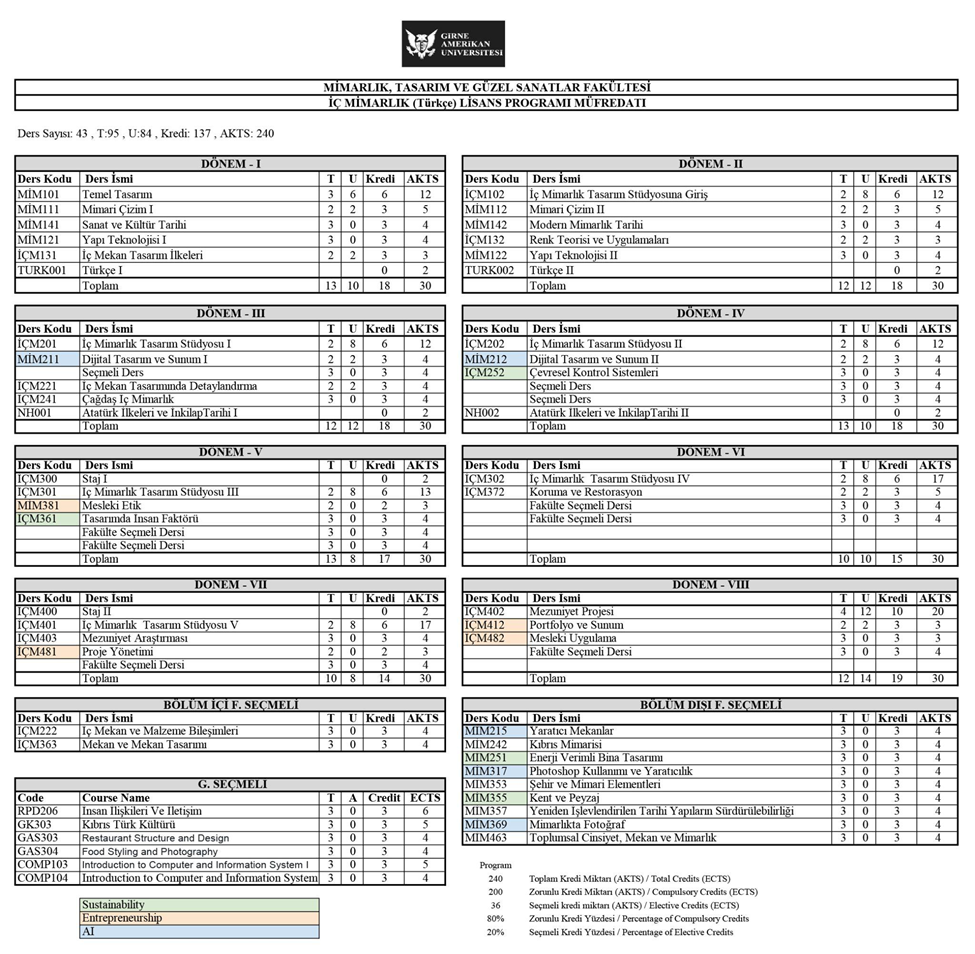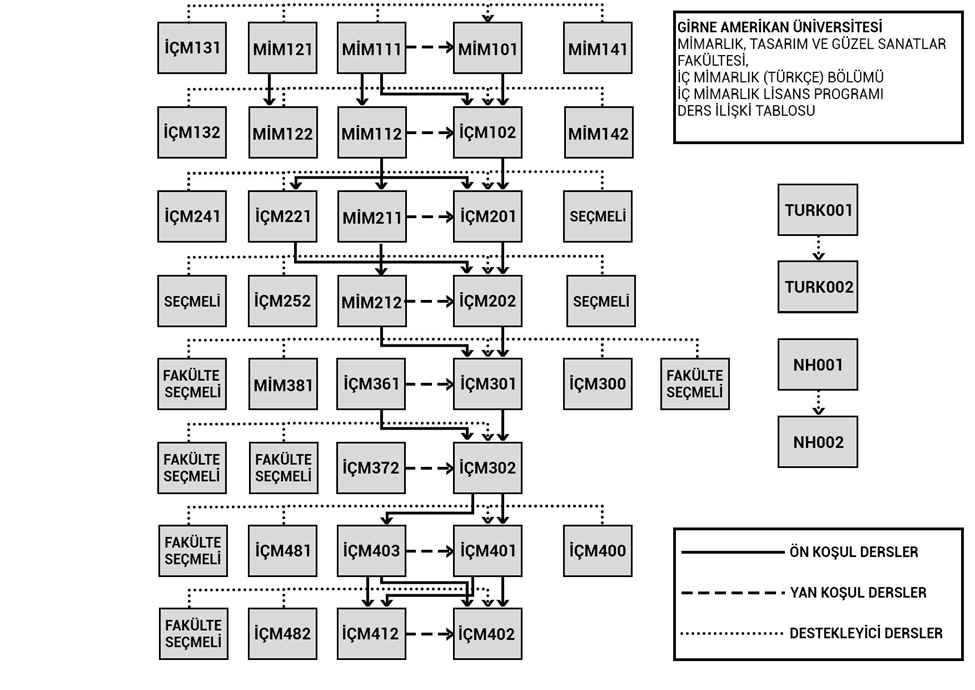


GAU - Department of Interior Architecture in Turkish language was established as part of the Faculty of Architecture, Design and Fine Arts at Girne American University in 2014.
With strong emphasis on biocentric and inclusive design values, the Department of Interior Architecture (Turkish Stream) provides education based upon critical thinking, social responsibility and sustainable design approaches. Educational program follows faculty guidelines as well as the department principles grounded in the creative processes in interior architecture supported by research and practice.
The department of Interior Architecture (Turkish stream) aims to provide students with the knowledge, skills, and values necessary to find creative, responsible and innovative ways to shape interior spaces that enhance the quality of life and wellbeing. The department is dedicated to a learner-centered education that integrates theory, research, and practice, enabling students to approach design challenges with critical awareness, cultural sensitivity, and a broad understanding of global and local contexts.
Through a curriculum grounded in design excellence, technical/technological competence, and sustainability, the department seeks to cultivate in its students a balance between artistic expression and functional, human-centered design solutions. It emphasizes the development of aesthetic judgment, analytical thinking, and problem-solving abilities that respond to social, environmental, and economic contexts.
Moreover, the department promotes ethical and social responsibility by encouraging students to consider the cultural and ecological implications of their design decisions. It strives to foster lifelong learning, interdisciplinary collaboration, and professional integrity, preparing graduates to become leaders and innovators in the field of interior architecture both locally and globally.
The vision of the Department of Interior Architecture (Turkish) is to become a leading academic unit recognized nationally and internationally for its excellence in interior architecture education, innovative research, and meaningful contributions to society. The department aspires to serve as a center of creativity, critical inquiry, and professional development, setting high standards in design education and advancing the discipline within both academic and professional contexts.
By fostering an environment that values innovation, diversity, and sustainability, the department aims to nurture a new generation of designers who can respond to the complex spatial, cultural, and environmental challenges of the 21st century. It envisions a dynamic educational model that integrates traditional design knowledge with emerging technologies and interdisciplinary collaboration, bridging the gap between academia, industry, and community needs.
Through continuous improvement, international partnerships, and socially responsible design practices, the department seeks to contribute to the sustainable transformation of the built environment and to be recognized as a hub of academic excellence, creativity, and cultural relevance in the field of interior architecture.
1. Creativity and Innovation: The department embraces creativity as the foundation of interior architecture education and practice. It encourages students and faculty to think critically, explore new ideas, and experiment with emerging design methods and technologies. Through studio-based learning and research-driven projects, the department fosters a culture of innovation that challenges conventional boundaries and promotes forward-thinking solutions for contemporary spatial challenges.
2. Sustainability: Committed to environmental stewardship, the department promotes sustainable design principles that prioritize resource efficiency, ecological balance, and human well-being. Students are encouraged to integrate sustainability into every stage of the design process— from material selection to energy performance and user comfort—ensuring that their work contributes to the long-term resilience of the built environment.
3. Cultural Sensitivity: Recognizing the importance of cultural diversity and identity, the department values design as a means of expressing and preserving cultural heritage. It promotes awareness and respect for the social, historical, and geographical contexts in which design takes place. Students are guided to create spaces that respond sensitively to local traditions and global influences, reflecting a deep appreciation for the cultural dimensions of interior architecture.
4. Ethical Responsibility: The department upholds the highest standards of academic integrity and professional ethics. Students and faculty are encouraged to conduct their work with honesty, fairness, and respect for others, acknowledging the designer’s responsibility toward users, clients, and the broader society. Ethical awareness is integrated into the curriculum to ensure that graduates act with accountability and social consciousness in their professional practice.
5. Collaboration and Community: The department believes in the power of collaboration and collective creativity. It fosters teamwork among students, faculty, and professionals while encouraging engagement with local and international communities. Through partnerships, community-based projects, and interdisciplinary initiatives, the department aims to strengthen the connection between academia and society, making design a tool for positive social transformation.
6. Lifelong Learning: Acknowledging that interior architecture is an evolving discipline, the department promotes a mindset of continuous learning and self-improvement. It encourages both students and faculty to remain open to new knowledge, technologies, and perspectives throughout their professional lives. This value supports adaptability and resilience in a rapidly changing global context, empowering graduates to remain relevant and innovative in their careers.
GOAL 1: To provide high-quality education that integrates design theory, technology, and practice.
The department aims to deliver a comprehensive education that bridges theoretical knowledge with hands-on design experience. By combining design principles, emerging technologies, and practical applications, the curriculum prepares students to approach complex spatial challenges with confidence and creativity. Continuous curriculum updates, studio-based learning, and technology-integrated coursework ensure that students develop a holistic understanding of the interior architecture discipline.
GOAL 2: To promote interdisciplinary learning and research across design-related fields.
Recognizing that interior architecture intersects with numerous disciplines—such as architecture, industrial design, environmental psychology, and urban design—the department encourages collaboration across academic and professional fields. Interdisciplinary projects, workshops, and joint research initiatives help students and faculty broaden their perspectives and develop comprehensive design solutions that respond to the diverse needs of contemporary society.
GOAL 3: To equip students with the analytical, creative, and technical skills necessary for professional success.
The department strives to cultivate well-rounded designers capable of critical analysis, conceptual thinking, and technical proficiency. Through structured coursework, studio practice, and exposure to real-world case studies, students develop strong design communication skills, digital competencies, and problem-solving abilities. This integrated skill set prepares graduates to enter the global design profession with competence, adaptability, and innovation.
GOAL 4: To contribute to academic research and design innovation in interior architecture.
As an academic unit, the department is committed to advancing knowledge in the field of interior architecture through research, experimentation, and scholarly dissemination. Faculty and students are encouraged to engage in research that explores design theories, materials, sustainability, and human-centered approaches. By fostering a research culture, the department aims to become a reference point for innovative and evidence-based design education.
GOAL 5: To strengthen partnerships with industry and the community for real-world learning opportunities.
The department seeks to build strong relationships with professional organizations, governmental bodies, and private sector partners. These collaborations provide students with opportunities for internships, workshops, and community-based projects, enhancing their practical experience and professional readiness. Through such partnerships, the department contributes to the social and cultural development of the community while maintaining a strong connection between academia and practice.
GOAL 6: To continuously enhance the quality assurance processes and academic standards within the department.
The department is dedicated to maintaining and improving academic excellence through systematic evaluation, feedback, and quality assurance mechanisms. Regular curriculum reviews, student assessments, and accreditation processes ensure that teaching and learning outcomes align with institutional, national, and international standards. By fostering a culture of continuous improvement, the department ensures that its programs remain relevant, competitive, and responsive to the evolving needs of the design profession.
The Department of Interior Architecture (Turkish) operates under the Faculty of Architecture, Design and Fine Arts. It is administered by a Head of Department, supported by Administrative Staff. The department’s structure ensures the effective coordination of academic, research, and administrative functions.
The organizational scheme typically includes:
Head of Department
Academic Staff (Professors, Associate Professors, Assistant Professors, Lecturers)
Research Assistants and Technical Staff
Administrative Assistant
Regular departmental meetings, curriculum committees, and quality assurance reviews are conducted to ensure transparency and collaborative decision-making.
1- Create comprehensive interior designs within different scales and scopes.
2- Generate effective communication through different media.
3- Interpret the knowledge of history and theories of interior architecture.
4- Relate to different methods and research in the field of interior architecture.
5- Design spaces and furniture.
6- Compile projects according to professional codes and principles.
7- Incorporate environmental aspects and sustainability into the design process.
8- Develop and manage planning and productions processes.