


The Department of Graphic Design at Girne American University was established in 1995 under the Faculty of Architecture and Engineering and has been part of the Faculty of Architecture, Design, and Fine Arts since 2009. Since its inception, the department has aimed to provide a comprehensive education that integrates creativity, technology, and conceptual thinking.
Over the years, the program has evolved in response to global design trends, digital innovation, and the expanding role of visual communication in society.
Key milestones include:
• Launch of the BA in Graphic Design program (1995)
• First graduates (2000)
• Curriculum revisions aligned with international standards (2025)
• Increased collaboration with cultural institutions and design studios.
The Department of Graphic Design aims to cultivate creative, critical, and socially responsible designers equipped to address the evolving needs of contemporary society.
To be a leading academic and creative hub in the region, recognized for integrating sustainability, cultural diversity, and technological innovation into the practice and education of graphic design.
• Creativity & Innovation: Encouraging original thinking and experimentation in visual communication.
• Sustainability: Promoting environmentally responsible design practices and material awareness in all projects.
• Cultural Diversity: Embracing multicultural perspectives and fostering inclusivity in visual expression and education.
• Ethical Design: Upholding integrity, empathy, and social consciousness in creative practice.
• Technological Advancement: Integrating emerging technologies, digital tools, and interdisciplinary approaches into design processes.
• Collaboration & Community: Building strong connections between students, faculty, industry, and society.
• To provide students with a comprehensive education that balances creative exploration with professional skills.
• To integrate sustainability and ethical awareness into design education and practice.
• To engage with cultural and social diversity as a source of creative inspiration and responsibility.
• To encourage research and experimentation with new design technologies and media.
• To strengthen ties with the creative industries through workshops, internships, and collaborative projects.
• Curriculum development aligned with emerging design fields.
• Professional development opportunities for academic staff.
• Improving student readiness for professional practice.
• Enhancing research culture within the department.
• Expanding international collaborations and exchange programs.
Faculty Strategic Goals (FSG) vs Departmental Strategic Goals Matrix | ||||||
Departmental Goals | FSG.1 | FSG.2 | FSG. 3 | FSG. 4 | FSG. 5 | FSG.6 |
DSG1 | ✔ | ✔ |
| ✔ |
| ✔ |
DSG2 |
| ✔ | ✔ | ✔ | ✔ | ✔ |
DSG3 | ✔ | ✔ |
|
|
| ✔ |
DSG4 |
| ✔ | ✔ | ✔ | ✔ | ✔ |
The Department of Graphic Design operates under the Faculty of Architecture, Design and Fine Arts. It is administered by a Department Chair, supported by Administrative Staff. The department’s structure ensures the effective coordination of academic, research, and administrative functions.
The organizational scheme typically includes:
Head of Department
Academic Staff (Professors, Associate Professors, Assistant Professors, Lecturers)
Research Assistants and Technical Staff
Administrative Assistant
Regular departmental meetings, curriculum committees, and quality assurance reviews are conducted to ensure transparency and collaborative decision-making.
1- To understand the basic principles of typography
2- To develop an eye for letter-spacing, words-pacing, leading and alignment
3- To establish hierarchies within a text and understand the role composition plays in the creation of typographic hierarchy
4- To explore the use of grid systems
5- To think broadly and conceptually about design opportunities with text
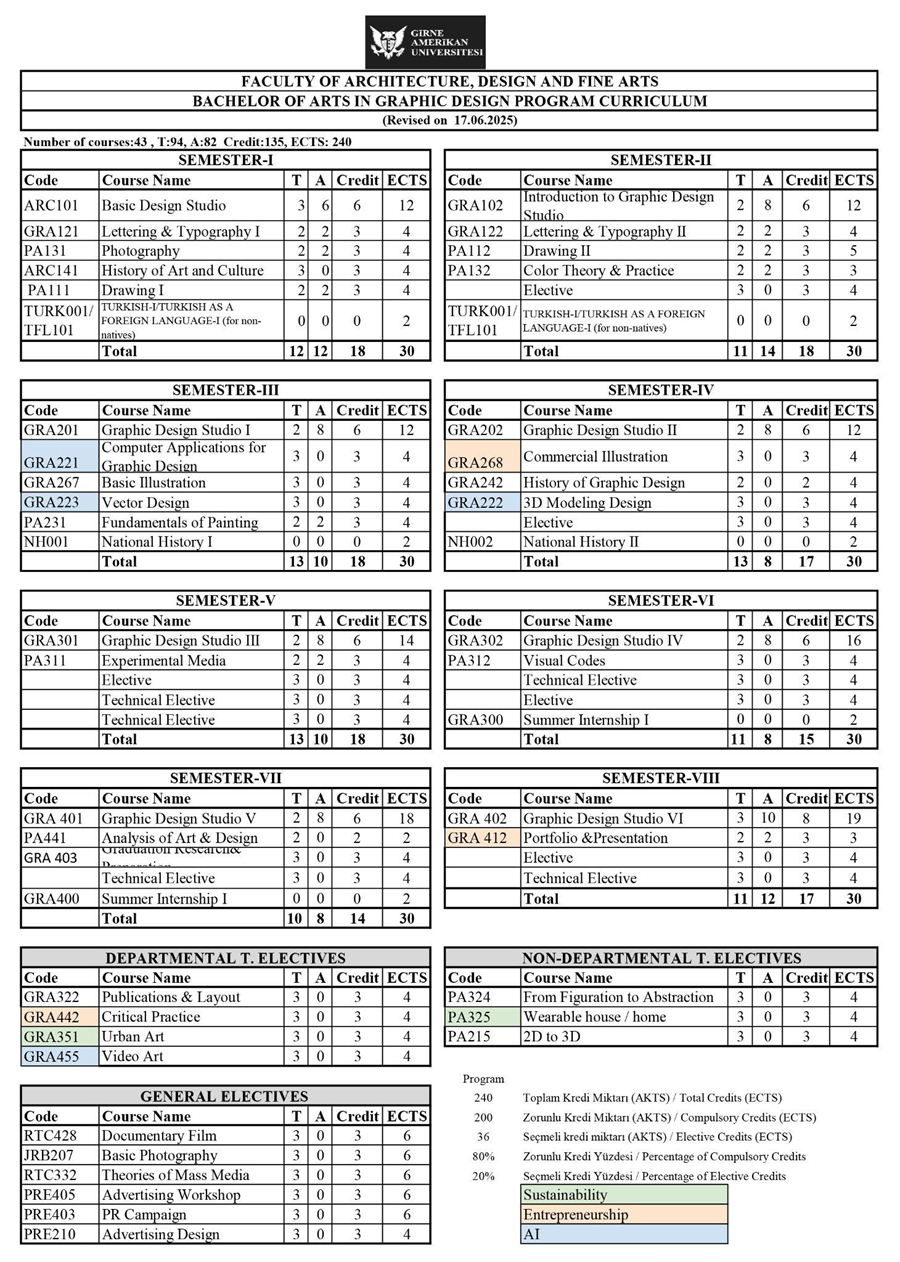
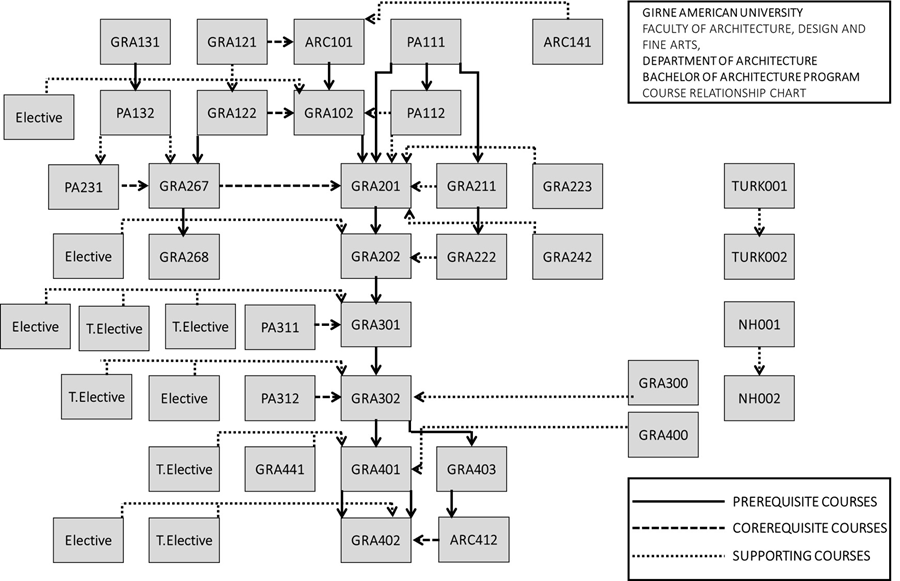
• Experienced and dedicated faculty with strong international academic backgrounds.
• Student-centered instruction focused on conceptual and creative development.
• Diverse program integrating multiple visual communication disciplines.
• Strong cultural identity and innovative design approach.
• Multicultural student body enriching the learning environment.
• Active project-based learning model with reviews and workshops.
• Supportive academic atmosphere fostering growth and mentorship.